

The sacred Kedarnath Temple, following an ancient tradition of seasonal closure that has been followed for over a millennium will continue to do so and close its doors on October 23, 2025, at 8:30 AM for all devotees, followed by vedic chants, and rituals.
This marks the end of the pilgrimage season and the beginning of a six-month winter ‘kapaat band.’
This closure isn’t merely a logistical decision but a deeply spiritual tradition rooted in centuries-old customs. Read on to know all about the schedule of this active dham and how to plan your dham yatra to this ‘Jyotirlinga.’
Kedarnath Temple Yatra Closing : Key Essentials To Know
- Kedarnath Temple officially closes on October 23, 2025, at 8:30 AM, following the traditional schedule that occurs usually two days after Diwali on Bhai Dooj.
- During the six-month closure, the holy Panchmukhi Utsav idol of Lord Kedar is shifted to Omkareshwar Temple in Ukhimath, where devotees can continue their prayers and worship.
- The temple remains accessible to pilgrims from May through early November, providing a six-month window for the sacred Kedarnath Yatra experience.
- The Kedarnath temple opening dates for 2026 will be announced on the ocassion of Mahashivratri on 15th February, 2026.
Kedarnath Closing Ceremony Details & Significance
Located at an elevation of 3,583 meters in the Garhwal Himalayas, this holy shrine dedicated to Lord Shiva operates on a unique schedule that will close its sacred doors on October 23, 2025, at 8:30 AM, following the traditional Bhai Dooj celebration, in a ceremony called as the kapaat band ceremony.
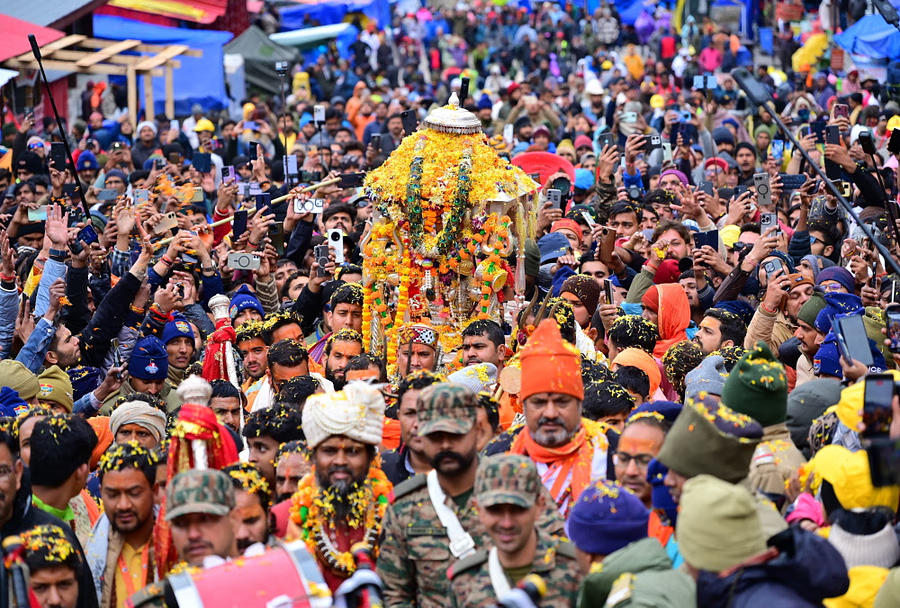
This grand closing ceremony features elaborate rituals performed by the temple priests, accompanied by the melodious sounds of Garhwal bands.
The most significant aspect of the ceremony involves the procession of “Kedarnath Doli” (palanquin), which ceremoniously escorts Lord Shiva’s idol to his winter residence in Ukhimath, where pilgrims can take baba kedar’s darshan when Kedarnath temple doors are closed.
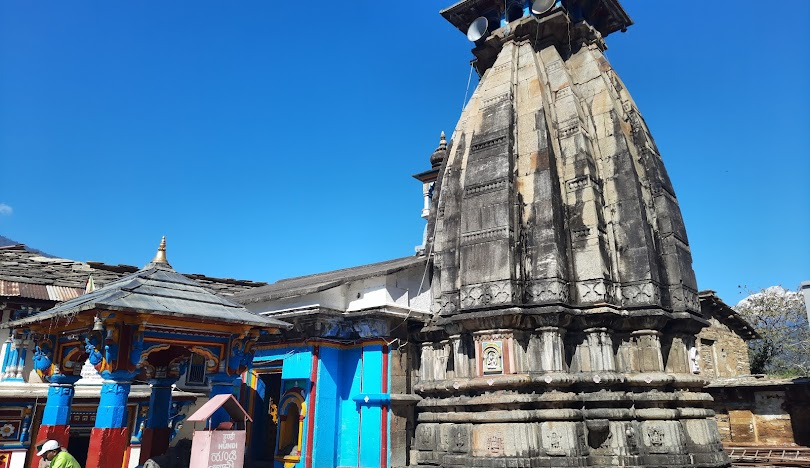
The closing ceremony itself is a magnificent spectacle that draws devotees from across the globe, transforming the temple premises into a venue of profound spiritual significance.
The months leading up to the closure offer pilgrims their final opportunity to experience the divine energy of Kedarnath before the Himalayan winter claims the region for half a year.
Once closed the Kedarnath temple doors will next open during late April 2026 or early May 2026. The opening dates of the Kedarnath Temple will be announced on 15th February 2026 on the occasion Mahashivratri.
Why Do The Kedarnath Temple Close Doors Every Year?
The temple closes due to extreme weather conditions, with heavy snowfall starting in November that makes all routes inaccessible.
The harsh Himalayan winter brings temperatures that can plummet to -20°C or lower, creating life-threatening conditions for pilgrims.
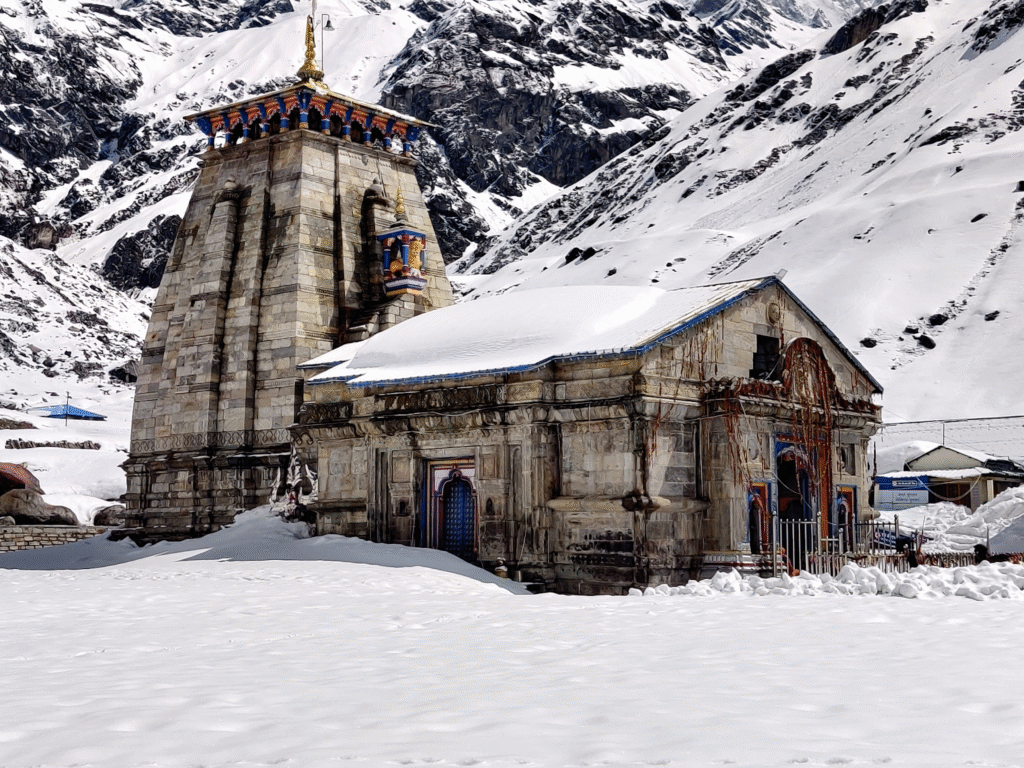
Photo source: Shri Badrinath Kedarnath Temple Committee
The 16-kilometer trekking route from Gaurikund becomes completely snow-covered and dangerous, while the high-altitude location experiences severe blizzards.
This natural closure allows the temple to remain protected from harsh weather elements while maintaining the ancient tradition of seasonal worship patterns.
Note: You can still take blessings of Kedarnath at the Omkareshwar Temple at Ukhimath as deity’s idol is ceremonially moved to this location after the kapaat band ceremony.
Kedarnath Temple Regular Timings For Darshan When Open
When operational, the Kedarnath Temple maintains specific darshan timings throughout the day.
Morning Aarti occurs from 4:00 AM to 7:00 AM, followed by General Darshan from 7:00 AM to 3:00 PM.
The temple remains closed from 3:00 PM to 5:00 PM, then reopens for Evening Darshan from 5:00 PM to 7:00 PM, followed by Evening Arti from 6:00 PM to 7:30 PM.
However, during peak times, the doors of the temple are open through the night.
Entry to the temple is completely free, making it accessible to all devotees regardless of their economic background.
Yet, if you wish to get express darshan, you can get an official pass costing an amount of INR 1,500 to INR 2,500 that can cut down the darshan timings for you.
How To Reach Kedarnath?
Reaching Kedarnath requires careful planning and multiple transportation modes. The nearest airport is Jolly Grant Airport in Dehradun, while the closest railway station is Rishikesh.
From these points, travelers must reach Gaurikund by road, which serves as the base for the 16-kilometer trek to Kedarnath. The journey options vary by season:
| Season | Best Route | Safety Level | Additional Notes |
|---|---|---|---|
| May-June | Road to Gaurikund + Trek | Moderate | Peak season, crowded |
| July-August | Helicopter from Phata | High | Monsoon alternative |
| September-October | Road to Gaurikund + Trek | High | Best weather conditions |
Best Time To Visit Kedarnath Dham?
While there is no ‘best time to visit’ baba kedar, whenever you get a call IS THE he best time to visit the temple when its open.
Still the popular times or rather the busiest days for the Kedarnath temple spans from May through October, with September and October being particularly favorable.
These months offer the most stable weather conditions, with clear skies providing spectacular views of the surrounding peaks. September-October experiences minimal rainfall, making the trekking route safer and more comfortable.
The temperature of the region around the Kedarnath temple during these months ranges from 5°C to 18°C, creating ideal conditions for spiritual contemplation and physical endurance required for the journey.
Additionally, the post-monsoon period ensures that the natural beauty of the region is at its peak, with lush green meadows and crystal-clear mountain streams enhancing the spiritual experience.
Conclusion: Kedarnath Dham Doors Close On 23rd October 2025 on Bhai Dooj For 6 Months
The closing of Kedarnath Temple represents more than just the end of a pilgrimage season for 6 months; it embodies the eternal cycle of spiritual renewal and natural harmony.
As the temple doors close on October 23, 2025, Lord Shiva’s presence continues at Omkareshwar Temple in Ukhimath, ensuring that devotees can maintain their spiritual connection throughout the winter months.
For those planning to visit this sacred shrine, timing your journey between May and early November is essential, with September and October offering the most favorable conditions.
The temple’s closure serves as a reminder of nature’s power and the importance of respecting the Himalayan environment while pursuing spiritual growth.
FAQs
When will the Kedarnath Temple reopen after winter closure?
The Kedarnath Temple will reopen around April or May 2026. The exact dates for the Kedarnath temple opening will be announced on 15th February 2026, on the ocassion of Mahashivratri.
Does puja happen inside the temple when Kedarnath is closed?
When Kedarnath Temple is closed, pooja does not take place inside the main temple. However, worship continues at Omkareshwar Temple in Ukhimath, where Lord Shiva’s idol is housed during the winter months.
Can I visit Kedarnath during winter months for trekking?
Visiting Kedarnath during winter months (November to April) is extremely dangerous and not recommended. The routes are completely snow-covered, temperatures drop to life-threatening levels, and rescue operations become nearly impossible.
When will Kedarnath Temple reopen after closing in 2025?
Kedarnath Temple will reopen in late April next year or early May, following the traditional schedule determined by the auspicious day of Akshay Tritiya.
Where can I stay during the Kedarnath closing ceremony?
Accommodation options are available in nearby towns like Guptkashi, Phata, and Gaurikund. However, booking in advance is essential as the closing ceremony attracts thousands of devotees.
Is the helicopter service available during the closing period?
Helicopter services typically operate until a few days before the official closing date, but weather conditions can cause sudden cancellations. It’s advisable to check with operators for the latest schedule.
What happens to the temple structure during the six-month closure?
The temple remains completely sealed and protected from harsh weather conditions. The structure is designed to withstand extreme Himalayan winters, with snow acting as natural insulation for the ancient stone construction.