
Char Dham Yatra is one of the most important pilgrimages for any Hindu and, draws lakhs of devoted pilgrims every year to four sacred temples, Yamunotri, Gangotri, Kedarnath, and Badrinath.
This journey mostly happens only once for a devotee as it includes traveling across high-altitude terrain, unpredictable weather, and long stretches of remote mountain roads.
The physical and logistical demands of the Yatra make it essential for every pilgrim to follow specific guidelines, safety practices, and responsible behaviour.
Through our years of experience living here and hearing multiple experiences shared by tourists, this article covers the essential do’s and don’ts that help you stay safe, honour temple traditions, and complete your pilgrimage with peace of mind.
Char Dham Yatra Do’s and Don’ts – Essential Takeaways
Completing the Char Dham Yatra safely comes down to three things: the right paperwork, the right preparation, and the right mindset on the route.
- Every pilgrim must register before starting the Yatra. Authorities use this to track pilgrims, manage temple crowds, and coordinate emergency response when weather or health situations arise.
- Get a medical consultation, carry altitude sickness medication, pack warm layers, rain gear, trekking shoes, and enough cash to last the full route without depending on ATMs or mobile connectivity.
- Always travel before dark, follow weather advisories, use only registered services, walk at a pace your body can sustain, and leave no waste behind.
Why Following Do’s and Don’ts During Char Dham Yatra Is Important
The Char Dham route passes through some of the most remote parts of the Indian Himalayas. Medical facilities, phone connectivity, and emergency services are either sparse or entirely unavailable at several points along the way.
Sudden weather shifts, flash floods, and landslides happen in reality, and pilgrims must be mentally and physically prepared for the same. Altitude sickness is another serious concern, particularly at sites like Kedarnath and Gangotri, where oxygen levels drop significantly.
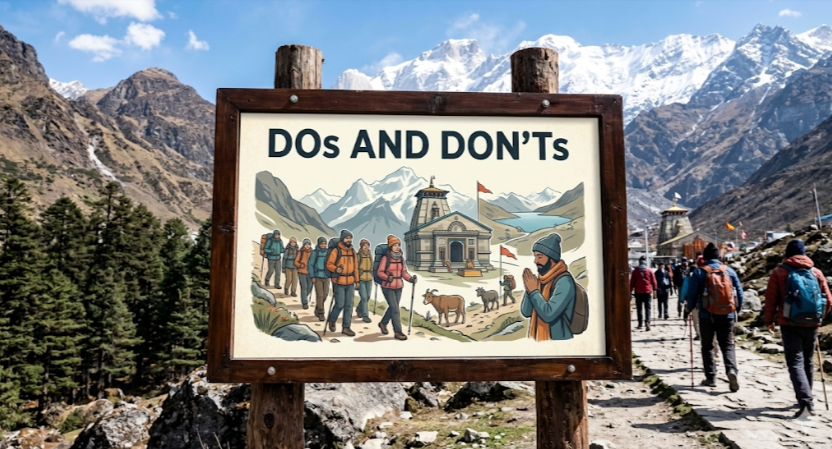
Every year, government authorities and the Uttarakhand administration issue safety guidelines to manage the massive flow of pilgrims, prevent accidents, and protect both lives and heritage sites. These guidelines are not bureaucratic formalities and are based on years of on-ground experience managing one of the world’s largest religious gatherings.
Beyond personal safety, responsible pilgrim behaviour plays a direct role in preserving the spiritual sanctity of the temples and the fragile Himalayan ecosystem that surrounds them.
Littering, ignoring crowd protocols, or disrupting temple rituals diminishes the experience for fellow pilgrims and harms a landscape that took millennia to form.
Following the recommended guidelines helps every pilgrim arrive safely, participate meaningfully, and return home with the full spiritual reward the Yatra is meant to deliver.
Essential Do’s For Char Dham Yatra
Preparation is the single most important factor that separates a smooth Char Dham Yatra from a difficult one.
Travel authorities, experienced pilgrims, and local administration consistently recommend a set of practices that protect health, prevent delays, and make the journey manageable regardless of age or fitness level.
These do’s address everything from pre-departure formalities to behaviour on the trekking trail, helping pilgrims avoid the most common problems reported each season.
Register for Char Dham Yatra Before Starting Your Journey
Char Dham registration is mandatory for all pilgrims in 2026 — without a valid e-pass, you will be denied entry at route checkpoints and temple premises.
Online registration opened on 6 March 2026 at 7 AM, and offline registration counters began operating on 17 April 2026, two days before the Yatra season began, with counters set up in Rishikesh, Haridwar, and Dehradun.
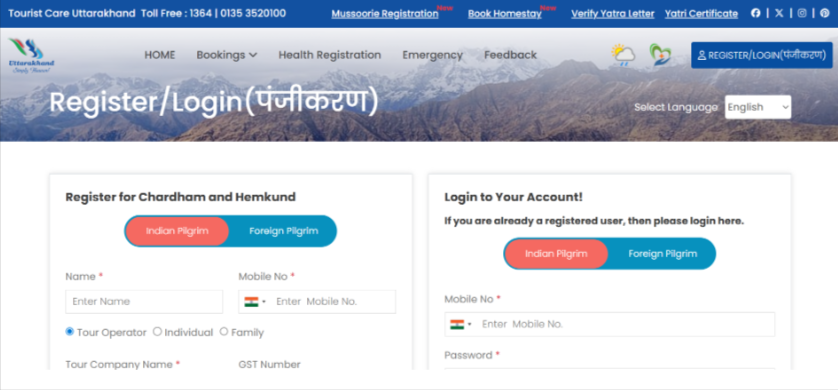
Please note: Registration is completely free for both online and offline modes.
Online: Visit registrationandtouristcare.uk.gov.in, create an account, fill in pilgrim details, upload a government-issued ID (Aadhaar is mandatory this year), select your travel dates and preferred shrines, and download your QR-coded e-pass.
You can also register by sending “Yatra” to WhatsApp number +91-8394833833, through the Tourist Care Uttarakhand mobile app, or by calling the toll-free helpline at 0135-1364.
Offline: If you cannot register online, offline registrations are also available from 17th April Visit any official registration counter across Rishikesh Transit Camp – Rishikesh, Rishikul Maidan – Haridwar, and Vikas Nagar.
Staff at these counters assist pilgrims with form filling, photographs, and biometrics where required, and issue either a printed e-pass or an SMS confirmation.
Once registered, carry both a printed copy and a digital backup of your QR-coded e-pass at all times. Yatrimitras scan your QR code at key checkpoints, including Sonprayag for Kedarnath and Janki Chatti for Yamunotri, as well as at trek starting points and temple entrances. Register as early as possible, since daily slot caps apply and peak dates fill up quickly.
Get a Medical Check-up Before the Yatra
Kedarnath sits at over 3,500 metres above sea level, and several other Char Dham sites are at similarly high altitudes where oxygen levels are noticeably lower than what most pilgrims are accustomed to.

Elderly pilgrims and those with pre-existing heart, respiratory, or blood pressure conditions must consult a doctor before departure. Medical fitness certificates may be required for certain categories of pilgrims.
Regardless of age, carry your personal prescription medicines, a compact first-aid kit, ORS sachets, and altitude sickness tablets.
If you are travelling with elderly family members, our senior citizen Char Dham travel guide can offer additional tailored advice on preparation and assistance services available along the route.
Pack Smart for Mountain Travel
Himalayan weather can shift from warm sunshine to biting cold within hours, even during peak summer months.

Essential items include thermal wear and warm layering, a waterproof jacket or raincoat, trekking shoes with a firm grip, a flashlight or headlamp, a power bank, dry snacks such as nuts and energy bars, sufficient drinking water, and all personal medicines and toiletries.
Avoid overpacking, as heavy luggage slows trekking pace and increases physical fatigue. Every item in your bag should serve a clear purpose on the route.
Start Your Journey Early in the Day
Mountain weather becomes unstable in the afternoon, and narrow Himalayan roads are safer and less congested during morning hours. Starting early allows pilgrims to complete key legs of the journey before visibility drops and road conditions worsen.
Most temple darshan timings also begin early in the morning, so early starts align with both safety and religious schedules. Travelling in daylight is especially important on roads with sharp curves and steep drops.
Respect Local Traditions and Temple Rules
Temple premises require modest clothing, measured behaviour, and genuine devotion. Follow the dress code at each shrine, speak softly, and avoid disruptive activity in queues or during prayers.
Obey instructions from temple authorities and security personnel. Photography restrictions at Char Dham temples have grown increasingly strict, in fact, the temples have now completely banned mobile phones and cameras inside the sanctum.
You can read more about this policy in our dedicated article on the camera and mobile ban at Char Dham temples.
Keep the Himalayas Clean
The Char Dham region is part of a sensitive ecological zone. Pilgrims should carry all waste back to designated bins and avoid discarding plastic bottles, food wrappers, or any other material on trekking paths or near water sources.
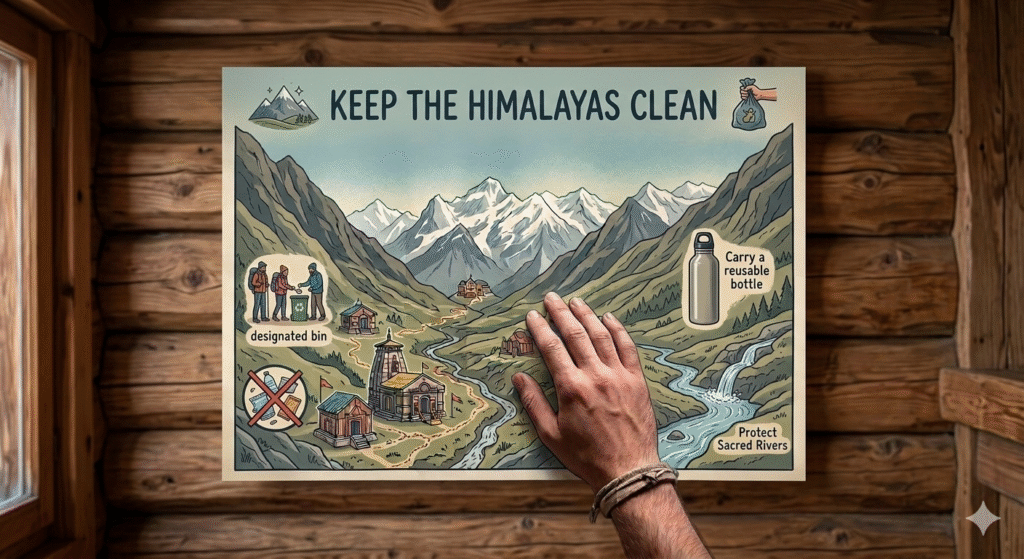
Sacred rivers like the Yamuna and the Ganga originate in this region, and polluting them, even incidentally, contradicts the spiritual spirit of the Yatra. Carry a reusable water bottle to reduce single-use plastic on the route.
Important Don’ts For Char Dham Yatra
A significant number of accidents and health incidents during Char Dham Yatra are caused not by unavoidable circumstances but by preventable decisions, travelling at the wrong time, ignoring official advisories, or pushing the body beyond its limits.
The following don’ts reflect patterns observed by local authorities and medical teams across multiple Yatra seasons. Avoiding these behaviours protects you and reduces strain on already-stretched emergency resources.
Avoid Travel at Night on Mountain Roads
Night travel on Himalayan roads carries serious risks: visibility is poor, roads are narrow with unguarded drops, and landslide activity is harder to detect in darkness.
Uttarakhand transport authorities explicitly restrict travel before 5 AM and after 7 PM on several Yatra routes. Plan your daily distances so that you reach your accommodation before sunset, leaving no need for after-dark driving or trekking.
Do Not Ignore Weather Warnings
Heavy rainfall in Uttarakhand can trigger landslides, wash away roads, and force sudden route closures. Check the Char Dham weather forecasts for each destination before leaving camp each morning.
If local authorities or the district administration issue travel advisories, follow them without delay. No darshan schedule is worth risking a journey in active landslide conditions.
Do Not Overexert Yourself During Trekking
The Kedarnath trek is difficult, and approximately 16 kilometres one way and gains significant elevation. Rushing this trek at altitude can cause acute mountain sickness, which can escalate quickly.
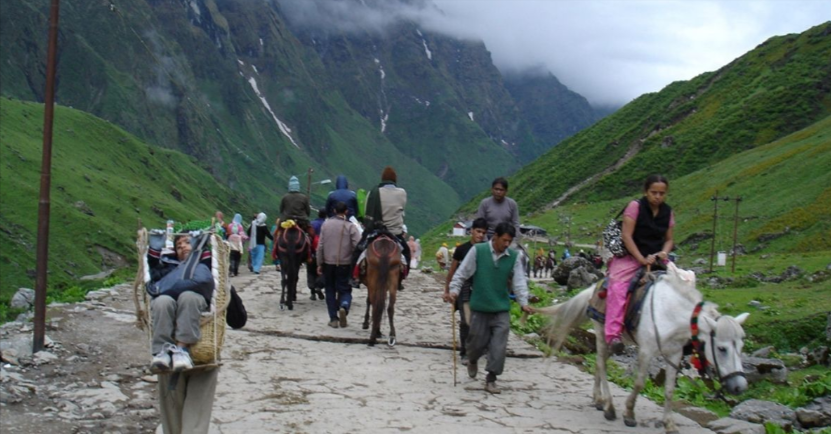
Walk at a steady, comfortable pace, take breaks every 30 to 45 minutes, and drink water regularly. Pilgrims who find trekking physically difficult should seriously consider pony, palki, or helicopter services rather than pushing through pain or breathlessness.
For more on booking helicopter services for Kedarnath, refer to our dedicated helicopter booking guide.
Do Not Use Unauthorized Services
Only hire vehicles, guides, porters, and ponies that are registered with the local authorities.
Unregistered operators may cut corners on safety, overcharge pilgrims, or lack the qualifications needed to navigate high-altitude terrain.
Government-approved services follow standardised pricing and safety protocols, giving you a more secure and predictable experience.
Do Not Litter or Pollute the Environment
Throwing plastic, leftover food, or ritual offerings directly into rivers causes lasting harm to the ecosystem and to the water that millions depend on downstream.
Pilgrims should also avoid washing clothes, utensils, or cooking equipment in sacred rivers. Responsible tourism is an act of devotion and it honours the same sacred landscape that draws pilgrims here in the first place.
Additional Tips for a Smooth Char Dham Yatra
ATM availability is limited beyond Rishikesh and Haridwar, and mobile connectivity is unreliable at higher altitudes. Carry enough cash to cover food, transport, accommodation, and emergencies for your entire route.
Before departing, share your complete travel itinerary with a trusted family member and save emergency numbers, including local police, temple helplines, and your tour operator, offline on your phone.
Build at least one or two buffer days into your schedule to accommodate weather delays or unplanned road closures, which are common during the Yatra season.
If trekking to Kedarnath is not feasible due to health or age, refer our guide on booking Kedarnath helicopter services that offer a safe and time-efficient alternative that still delivers the full darshan experience.
Conclusion: Follow The Dos and Donts For Char Dham Yatra
Char Dham Yatra is more than a journey across four temples, and is a deeply personal act of faith that demands equal measures of devotion and preparation.
Following the recommended guidelines will ensure that your pilgrimage is safe, respectful, and free from avoidable setbacks.
Pilgrims who travel responsibly also contribute to preserving the sacred temples and the fragile Himalayan environment for the generations of devotees who will follow in their footsteps.
Yes, registration is mandatory for all pilgrims visiting the Char Dham temples to help authorities manage crowds and ensure safety.
Early morning travel is recommended as weather conditions are more stable, roads are safer, and most temple darshan timings begin in the early hours.
Yes, but senior citizens should consult a doctor before travelling and may consider pony, palki, or helicopter services to manage physically demanding sections of the route.
Night travel is discouraged and officially restricted on several routes due to poor visibility, narrow roads, and elevated landslide risk after dark.
Foreign nationals can register on the official portal registrationandtouristcare.uk.gov.in or the Tourist Care Uttarakhand app using their email ID, along with their Passport number and Visa details.
If you miss online registration, you can walk into any offline counter at Rishikesh, Haridwar, or Vikas Nagar from 17 April 2026 and register on the spot for free. However, registering in advance is strongly recommended as daily pilgrim caps apply and your preferred dates may fill up quickly.