

The Char Dham Yatra includes the Himalayan shrines of Yamunotri, Gangotri, Kedarnath and Badrinath, each located in high-altitude terrain where weather shifts quickly, with temperatures often ranging from mild 12–20°C days in summer to sub-zero conditions as the season advances.
Seasonal conditions influence travel safety, road access and the overall comfort of pilgrims across these remote valleys.
A clear understanding of Char Dham weather shifts can help you choose the right months to travel, plan stay arrangements and prepare your mind and body accordingly.
Char Dham Yatra: Location & Weather Overview
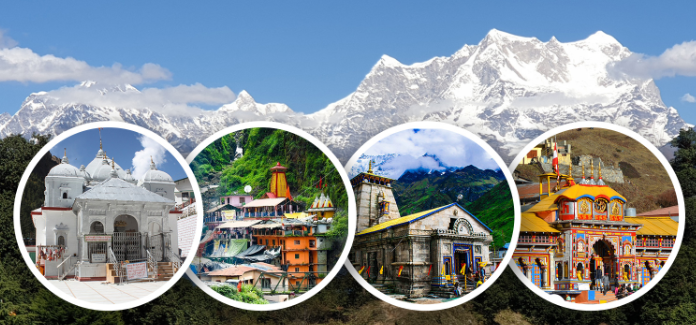
The Char Dham Yatra covers four Himalayan temples located across the upper Garhwal region, forming a significant pilgrimage route in North India.
- Yamunotri (origin of River Yamuna)
- Gangotri (origin of River Ganga)
- Kedarnath (dedicated to Lord Shiva)
- Badrinath (devoted to Lord Vishnu)
Each shrine stands in a high-altitude landscape where elevations reach nearly 3,000–3,500 metres, creating marked weather variations through the season.
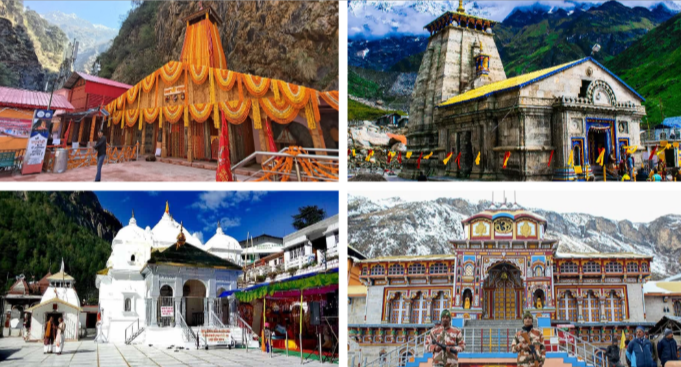
These Himalayan temples remain open only for about 6 to 7 months because snowfall blocks access through winter.
Such limited windows make careful planning important, and the broader Char Dham pilgrimage often depends on stable conditions for safe movement and stay.
Expected Temperature and Weather Conditions of Char Dham Locations
The four shrines lie close on the map yet face different Char Dham weather conditions because of altitude, valley position and seasonal wind patterns.
- Yamunotri and Gangotri:
Mild daytime temperatures around 12–20°C in summer and cold nights dropping to nearly 5°C. - Kedarnath and Badrinath:
Cooler even in peak season, with daytime temperatures of 8–15°C and early-season snowfall likely.
Winter temperatures fall well below freezing across all the four dhams, and heavy snow closes access for several months.
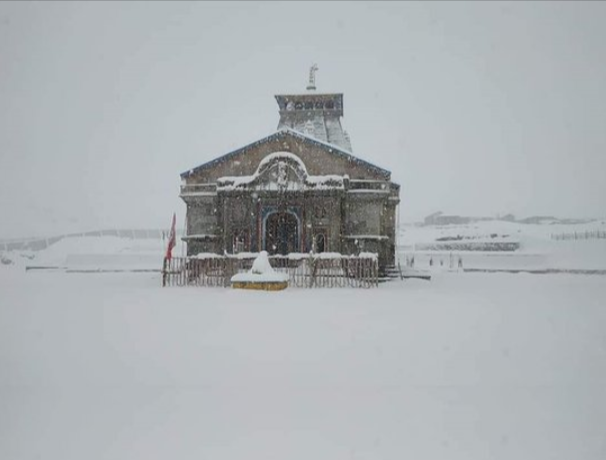
These variations affect movement, accommodation and health, so Char Dham temperature readings need regular monitoring during travel planning.
A steady check on weather in Char Dham helps estimate safe windows for trekking, road conditions and daily schedules along the route.
Weather and Temperature To Expect at Each Char Dham Temple
Weather across the four shrines shifts quickly due to elevation and terrain, so pilgrims often rely on Char Dham weather updates during the entire journey.
Seasonal changes influence walking routes, road access and health, making Char Dham temperature patterns an essential part of planning.
Yamunotri Temple Weather
Yamunotri experiences steady summer warmth with daytime Yamunotri temperature readings between 5°C and 15°C through May and June.
The season remains pleasant, though nights turn cold in the upper valley. Monsoon brings heavy rainfall that affects the narrow trekking path.
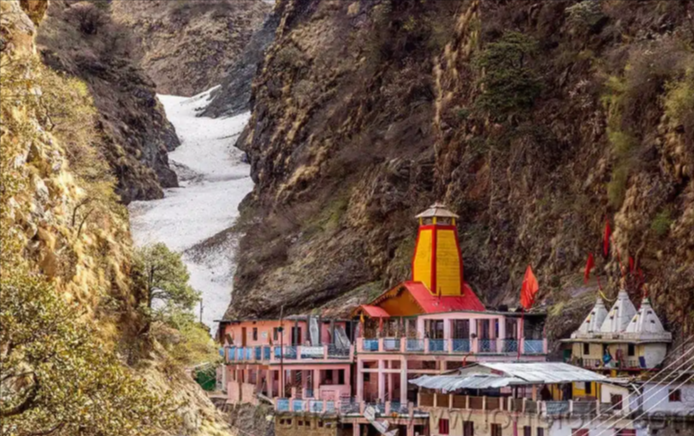
Autumn settles into a cool and quiet phase before closure. Winter conditions drop well below freezing, and weather in Yamunotri becomes unsuitable for movement, keeping the shrine shut even when Yamunotri weather today appears clear at lower altitudes.
Gangotri Temple Weather
Gangotri stays mild in early summer, with Gangotri temperature levels touching 6°C to 16°C around May and June. Clear days usually support smooth darshan and short walks.
Monsoon months see frequent showers and possible road delays along the Bhagirathi valley. As autumn begins, the air turns crisp, and the temple prepares for winter closure.
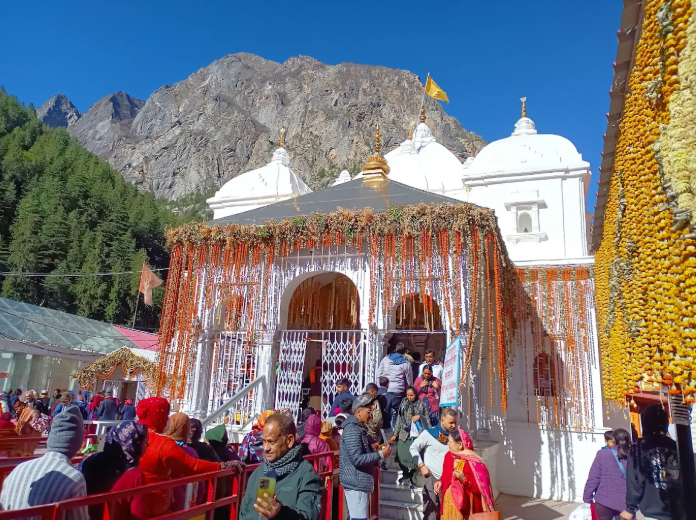
Heavy snowfall transforms weather Gangotri patterns by late November, and the shrine remains closed despite occasional clear Gangotri weather today reports.
Kedarnath Temple Weather
Kedarnath remains cooler than the other dhams even in peak season, with early Kedarnath temperature readings often between 2°C and 12°C. Summer is short, yet it offers the most stable period for darshan.
Monsoon adds significant risk from landslides and slippery stretches on the trekking route, and many travellers review route details through our dedicated guide on how to reach Kedarnath to navigate the trek safely and under the best weather conditions.
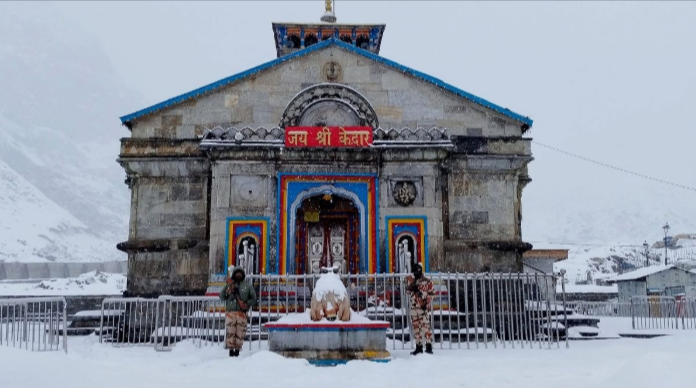
Autumn days stay cold and access reduces as snowfall becomes more frequent in the Kedarnath region.
Winter covers the region entirely, and Kedarnath weather conditions turn severe, making weather in Kedarnath today irrelevant for travel once closure begins.
Badrinath Temple Weather
Badrinath holds moderate conditions through May and June, with temperature levels ranging from 5°C to 17°C during the day.
Summer offers the calmest phase for pilgrims. Light showers during monsoon require rain protection but movement usually continues unless there are road advisories.
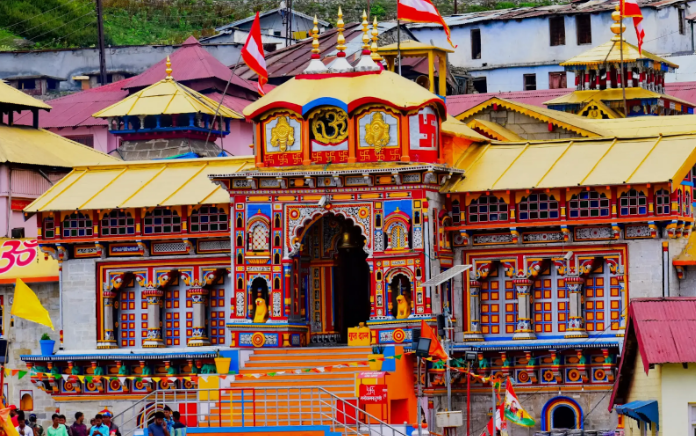
Autumn brings pleasant daytime warmth and noticeably cold nights. Winter snow blocks the entire valley, and Badrinath weather today updates mainly serve regional information, as the temple remains inaccessible.
Note: Travelers planning their route can refer to this guide on how to reach Badrinath and understand access conditions during shifting weather.
Char Dham Weather Monthly Guide
Month-wise conditions shape the rhythm of the entire yatra, and each phase carries its own pattern of temperature, road stability and travel comfort.
1. Char Dham Weather – April To June (Summer Season)
Summer marks the first stable phase of movement across the route.
Roads reopen after winter, snow recedes from higher bends, and daytime conditions stay pleasant enough for a steady pace.
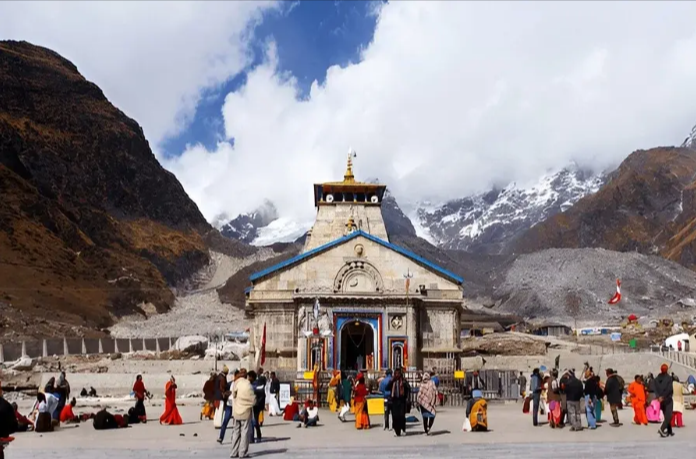
This period suits families and senior travellers because the climate remains predictable.
Many pilgrims prefer Char Dham in May or Char Dham in June for smooth schedules and safer driving hours. But remember, since all dhams close for the winter,
2. Char Dham Weather – July To September (Monsoon Season)
Monsoon introduces frequent rain, fog-covered stretches and scattered landslides across the valleys.
Travel becomes demanding, and the route often slows down due to weather alerts.
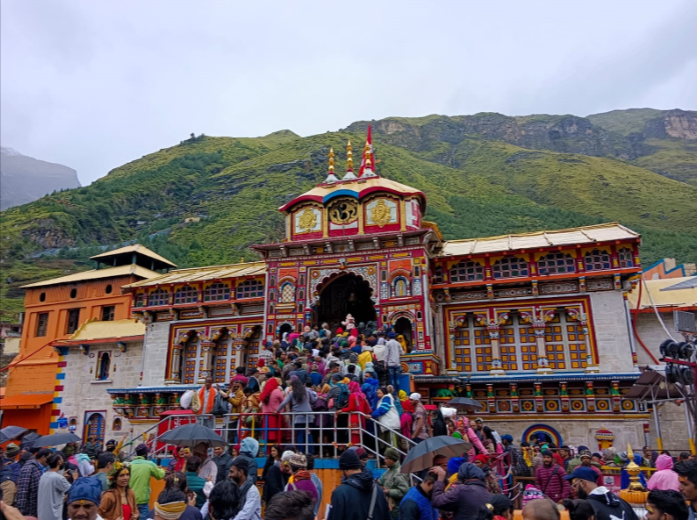
Only experienced trekkers attempt the journey during this phase, and even they proceed cautiously.
Continuous rain gear and regular updates are essential, especially while checking conditions such as weather in Kedarnath July or other local forecasts during the Char Dham monsoon period.
3. Char Dham Weather – October To November (Autumn Season)
Autumn arrives with clearer skies, bright slopes and cool, gentle winds. The atmosphere feels calm as the shrines move toward their closing dates.
Pilgrims who prefer quieter pathways choose this stage for its stable conditions.
Char Dham October weather often supports scenic photography, and many consider it one of the best time Char Dham periods before winter begins.
4. Char Dham Weather – December To March (Winter Season)
Winter brings freezing temperatures and heavy snowfall across all four shrines. Access remains closed, and the idols are shifted to their designated winter abodes for worship.
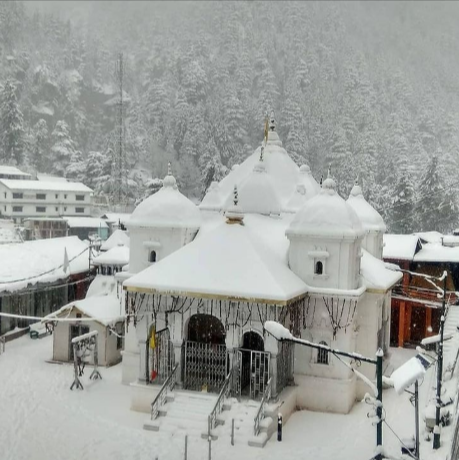
Only the lower-altitude settlements stay open for visitors and support staff. Char Dham winter patterns can change quickly, and stretches around Kedarnath snowfall zones remain entirely inaccessible through these months.
Best Time to Visit Char Dham In The Year
The overall Char Dham Yatra season depends on stable weather, and the most reliable period usually falls between late spring and early autumn.
- May–June and September–October offer the best time to visit Char Dham, as temperatures stay moderate, roads remain open, and visibility stays clear for most of the journey.
- Monsoon months such as July–August bring landslide risks, so travel becomes unpredictable across the high valleys.
- Early arrangements are helpful during the May–June rush, especially when the Char Dham Yatra season reaches its busiest stage.
Char Dham Yatra Opening and Closing Dates
The annual schedule follows a fixed pattern linked to traditional Hindu calendar events.
Char Dham Yatra opening dates usually fall on Akshaya Tritiya, while Char Dham closing dates occur after Diwali as winter conditions begin across the high valleys.
Char Dham Yatra 2025 Schedule:
| Temple | Opening Date | Closing Date | Location (Uttarakhand) |
| Yamunotri Temple | April 30, 2025 | October 23, 2025 | Uttarkashi District |
| Gangotri Temple | April 30, 2025 | October 22, 2025 | Uttarkashi District |
| Kedarnath Temple | May 2, 2025 | October 23, 2025 | Rudraprayag District |
| Badrinath Temple | May 4, 2025 | November 25, 2025 | Chamoli District |
Tip: Keep a small check on seasonal changes, especially near the Kedarnath closing dates, as weather shifts quickly during late autumn.
Weather Tips for Safe Char Dham Travel
Reliable preparation supports safe movement through the high-altitude routes, and most Char Dham travel tips emphasise daily Char Dham weather checks along the route.
Daily forecasts should be reviewed before departure, and the official IMD portal provides clear government updates and alerts for the Char Dham sector.
Trekking during heavy rain or fog must be avoided because visibility drops quickly across these valleys.
Warm layers, rain protection and waterproof footwear help maintain comfort, while gradual acclimatization supports overall Char Dham safety.
Char Dham Yatra Packing Essentials For Fighting Weather
A practical Char Dham packing list supports comfort across changing temperatures, rain spells and high-altitude conditions.
- Layered warm clothing for shifting day and night temperatures
- Woollen caps, mufflers and insulated gloves
- A reliable rain jacket, poncho and compact umbrella
- Trekking shoes with firm grip for wet and uneven paths
- Light woollen socks and an extra pair for colder stretches
- First-aid kit with essential medicines and basic dressing items
- Power bank and spare charging cables
- Reusable water bottle for frequent hydration
- Dry snacks for long travel hours
- Small torch or headlamp for early-morning movement and low-light areas
These items form the core of what to pack Char Dham for weather-dependent travel.
Do you know?
Understanding the Kedarnath trek difficulty helps pilgrims prepare better for changing weather on the route.
Conclusion: Planning Reduces Most Char Dham Weather Risks
The Char Dham Yatra becomes more comfortable and secure when the journey follows stable seasonal conditions outlined in any dependable Char Dham weather guide.
Each shrine carries its own climate cycle, moving from mild summer valleys to early-season snowfall in the higher basins, shaping how pilgrims travel and acclimatize along the route.
Regular weather checks, sensible packing and well-timed movement strengthen safety through the entire pilgrimage. Plan your Char Dham Yatra with careful month-wise preparation for a smoother experience.
FAQs
What is the best time to visit Char Dham?
May–June and September–October offer the most stable Char Dham weather, clearer skies and safer road conditions, making them the best time to visit Char Dham.
How is the weather in Kedarnath today?
Weather in Kedarnath today changes quickly, so checking official IMD updates is important. Kedarnath temperature often stays low even in early summer.
When does snowfall occur in Badrinath and Kedarnath?
Snowfall usually begins late October and continues through winter. Badrinath temperature and Kedarnath temperature drop below freezing until March.
Is it safe to visit during monsoon?
Monsoon months bring heavy rain and landslide risks, creating unstable Char Dham weather conditions and limiting movement.
What should I pack for the Yatra?
A basic Char Dham packing list includes warm layers, rain protection, strong footwear, essential medicines and a small first-aid kit.